





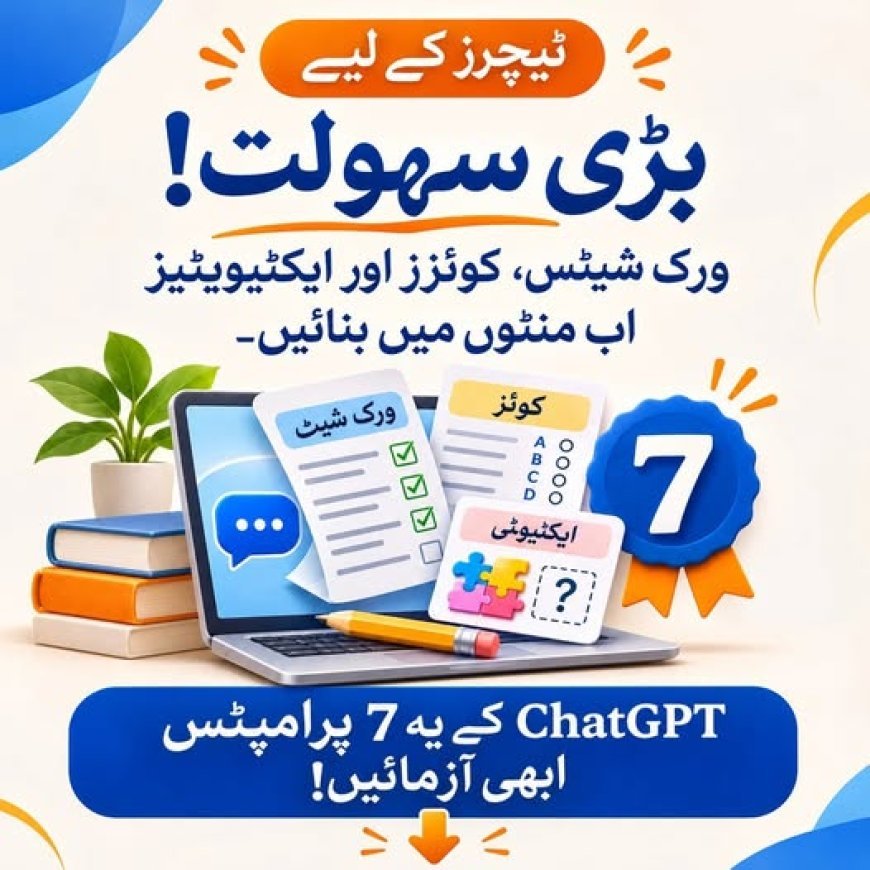
Prepare classroom materials in minutes! Worksheets, quizzes, activities, and much more. Use these 7 ChatGPT prompts
Prepare classroom materials in minutes! Worksheets, quizzes, activities, and much more. Use these 7 ChatGPT prompts! 👇

1-Create a Classroom Worksheet
Prompt:
“Act as an experienced teacher, curriculum designer, and educational materials creator. Create a complete, ready-to-use worksheet about [topic or skill] for [subject] students in [grade, age group, or level]. The worksheet should help students achieve [learning objective] and take approximately [time] to complete. Begin with a clear title and concise, student-friendly instructions. Include [number of questions or exercises] activities that progress logically from basic understanding to more challenging application. Use a varied mix of appropriate task types, such as [multiple choice, matching, fill in the blanks, short answer, problem solving, analysis, or other relevant formats]. Make all questions clear, accurate, age-appropriate, and directly connected to the learning objective. Include enough space or clear placeholders for student responses where appropriate. Avoid unnecessary repetition and ensure the difficulty is appropriate for the specified learners. Finish with a complete answer key containing the correct answers and brief explanations where needed. Format the worksheet clearly so I can easily copy, print, or adapt it for classroom use.”
2- Create a Classroom Quiz
Prompt:
“Act as an experienced teacher, assessment designer, and educational materials creator. Create a complete, ready to use quiz about [topic or skill] for [subject] students in [grade, age group, or level]. The quiz should assess students’ understanding of [learning objective or content covered] and take approximately [time] to complete. Include [number of questions] questions using an appropriate mix of formats, such as [multiple choice, true or false, matching, fill in the blanks, short answer, problem solving, or other relevant question types]. Organize the questions in a logical order and vary the difficulty from basic recall and understanding to application and higher level thinking where appropriate. Make every question clear, accurate, age appropriate, and directly aligned with the specified learning objective. Avoid ambiguous wording, unnecessary repetition, trick questions, and clues that reveal the correct answers. Assign a clear point value to each question and provide the total possible score. Finish with a complete answer key, including correct answers, point allocations, and brief explanations or scoring guidance where needed. Format the quiz clearly so I can easily copy, print, or adapt it for classroom use.”
3- Create a Reading Activity
Prompt:
“Act as an experienced teacher, literacy specialist, and educational materials creator. Create a complete, ready to use reading activity about [topic or theme] for [subject] students in [grade, age group, or level]. Use or create a reading text of approximately [word count] words that is appropriate for the learners’ reading level and supports [learning objective or reading skill]. Organize the activity into three stages: pre-reading, while reading, and post-reading. For the pre-reading stage, include activities that activate prior knowledge, introduce essential vocabulary, and encourage students to make predictions. For the while reading stage, include [number of questions or tasks] activities that check understanding of main ideas, supporting details, vocabulary in context, inference, text structure, and other relevant reading skills. For the post-reading stage, include activities that encourage students to summarize, analyze, respond to, discuss, or apply ideas from the text. Make all instructions and questions clear, age-appropriate, and directly connected to the learning objective. Include a complete answer key with acceptable answers and brief explanations where appropriate. Format the material clearly so I can easily copy, print, or adapt it for classroom use.”
4- Create Discussion Questions
Prompt:
“Act as an experienced teacher, discussion facilitator, and educational materials creator. Create a set of engaging discussion questions about [topic, text, lesson, or issue] for [subject] students in [grade, age group, or level]. The questions should support [learning objective] and encourage meaningful student participation rather than short, factual responses. Create [number of questions] questions that progress from accessible opening questions to deeper analysis, interpretation, evaluation, and personal reflection. Include an appropriate mix of questions that ask students to express opinions, explain their reasoning, make connections, compare perspectives, provide examples, consider alternatives, and apply ideas to real situations. Make every question clear, age-appropriate, open-ended where appropriate, and directly connected to the topic and learning objective. Avoid repetitive questions, overly broad prompts, and questions that can be answered with only yes or no. Include optional follow-up questions or prompts that I can use to extend the discussion when students need encouragement to elaborate. Organize the questions in a logical sequence and format them clearly so I can easily use them for whole-class discussion, pair work, or small-group activities.”
5- Create a Graphic Organizer
Prompt:
“Act as an experienced teacher, instructional designer, and educational materials creator. Create a clear, ready to use graphic organizer about [topic, concept, text, or lesson] for [subject] students in [grade, age group, or level]. The organizer should help students [learning objective, such as compare ideas, organize information, identify relationships, sequence events, summarize content, or plan their thinking]. Select the most appropriate organizer format for this purpose, such as [Venn diagram, concept map, sequence chart, cause and effect chart, timeline, story map, comparison table, or other format]. Organize the information into clearly labeled sections with concise, student-friendly instructions explaining what students should add to each part. Include [number of sections, categories, or elements] and provide prompts, guiding questions, or sentence starters where appropriate to support students’ thinking. Make the structure visually clear, logical, age-appropriate, and directly aligned with the learning objective. Leave sufficient space for students to record their ideas and avoid unnecessary text or decorative elements that could distract from the task. Include a completed example or suggested responses where appropriate. Format the organizer clearly so I can easily copy, print, display, or adapt it for classroom use.”
6- Create a Classroom Activity
Prompt:
“Act as an experienced teacher, curriculum specialist, and educational materials creator. Create a complete, ready-to-use revision resource for [subject] students in [grade, age group, or level] covering [topic, unit, concepts, or skills]. The resource should help students review [learning objectives or previously taught content], reinforce key knowledge and skills, identify gaps in understanding, and prepare for [test, exam, assessment, or upcoming lesson]. Begin with a concise summary of the essential concepts, vocabulary, formulas, rules, processes, or other information students need to remember. Then create [number of questions or activities] varied revision tasks that move from recall and basic understanding to application, analysis, and problem-solving where appropriate. Include suitable formats such as [multiple choice, matching, short answer, retrieval questions, practice problems, error correction, application tasks, or other relevant formats]. Add a short self-check section that helps students identify which areas they understand well and which they need to review further. Keep all content accurate, age-appropriate, and directly aligned with the specified learning objectives. Finish with a complete answer key containing correct answers and brief explanations where needed. Format the resource clearly so I can easily copy, print, or adapt it for classroom or independent study use.
7- Create a Classroom Activity
Prompt:
“Act as an experienced teacher, instructional designer, and educational materials creator. Create a complete, ready-to-use classroom activity about [topic or skill] for [subject] students in [grade, age group, or level]. The activity should help students achieve [learning objective] and take approximately [time] to complete. Design an engaging task that requires students to actively use, apply, discuss, analyze, practice, or demonstrate what they are learning rather than simply receive information. Specify whether students should work [individually, in pairs, in groups, or as a whole class] and list any materials or resources required. Provide clear, step-by-step teacher instructions for setting up, explaining, managing, and concluding the activity, along with concise student instructions that can be displayed or distributed directly. Include any questions, prompts, scenarios, examples, cards, or other content needed to run the activity. Explain how I can check whether students have achieved the learning objective and include a brief follow-up or reflection task to consolidate learning. Where appropriate, suggest simple adaptations for students who need additional support or greater challenge. Keep the activity realistic for [class size and teaching context], minimize unnecessary preparation, and format everything clearly so I can use or adapt it immediately.
What's Your Reaction?
 Like
0
 Dislike
0
 Love
0
 Funny
0
 Angry
0
 Sad
0
 Wow
0